Gun violence has wide-ranging consequences that extend far beyond immediate physical harm, affecting mental health, family stability, and economic well-being. As firearm-related injuries and deaths increase, so do the lasting effects of grief, trauma, and mental health challenges for children, families, and communities, while also placing significant economic strain on the state.
the
ripple
effect
of gun violence

Cascading Harm
When we learn more about the cascading harm gun violence poses across our communities, it becomes even more clear that a public health approach is needed to address all of the many factors around this important issue.
Firearm violence leads to cascading harm across society
Those who lose their lives to firearms
Those who are direct witnesses
Those who are injured
Those who lose their loved ones
Those who are exposed in affected communities, including schools
Those who experience collective trauma and fear
Real Impacts of Gun Violence

Mental Health Impact
Increase in psychiatric disorders in the family of children and teens who died from a firearm injury: siblings 2.3X higher; mothers 3.6X higher; fathers 5.3X higher.

Stress and Fear in Adults
Over 50% of U.S. adults report feeling stressed about possibly being a victim of a mass shooting while over 30% have fear that makes it hard for them to go to certain places or events.

of Teens Are Worried
Over 50% of U.S. teens aged 14-17 say they worry about a school shooting impacting them.

Mothers Experiencing Depression
Mothers who see at least one shooting in their community are up to 60% more likely to experience depression.

Youth Emergency Department Visits
From 2019-2022, the average number of weekly emergency department visits for firearm injuries were highest among young people aged 15-24 years old.
Economic Costs
The emotional cost of losing a loved one to gun violence cannot be measured. But the cost of caring for individuals and communities hurt by it can be. Both fatal and non-fatal firearm injuries pose a serious economic burden on society.
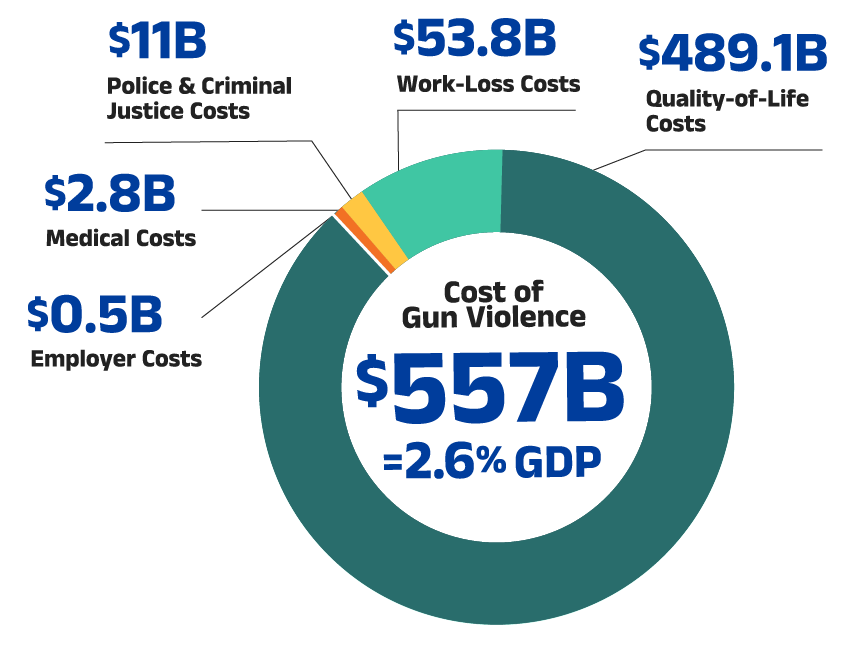
Researchers at Harvard Medical School find that gun violence takes a big toll on the economy, at a cost of $557 billion annually, or 2.6% of gross domestic product. Most of these costs pay for emergency responders and police investigations; medical treatment; and quality-of-life losses for survivors and their families, who experience physical and mental health problems that can be lifelong.
Connecticut has some of the strongest gun safety laws in the nation. Yet, even while the state experiences a lower rate of gun violence than many others, the financial burden of firearm injury on hospitals, insurers, employers, and public services is still very high at about $1.2 billion a year.